|
REPORTING
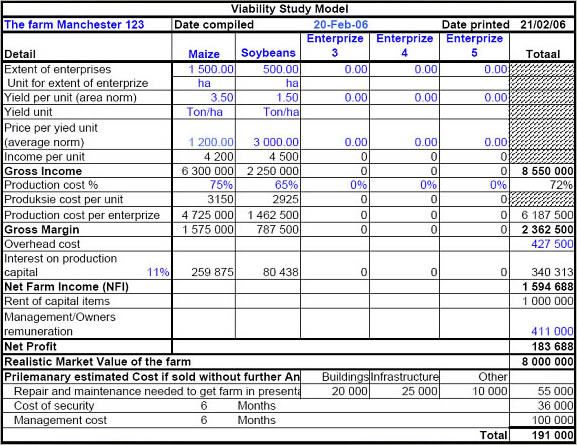
There is no prescribed format of reporting within the valuation industry other than minimum requirements based on the client request. ALPRO have however implemented an internally designed and developed trademark registered uniform reporting format after extensive consultation with the end user of such valuation reports as well as agricultural specialist. The emphasis of the ALPRO report is on demonstrating the financial calculations according to our methodology of breaking up the property in various components. This makes for easy understanding whilst simultaneously ensure more accuracy. This standardization also ensures that our clientele save time in unnecessarily reading long essays with very little lay-out of calculations, rather than having the essence of a valuation report immediately visible. The ALPRO focus is on mutually accepted agricultural based sub devised value contributing components and explanation of the individual components calculations with elaborations where required.
The ALPRO valuation report is subdivided in the following divisions:
- Division 1 – Instruction. This division contains the following information:
- The instruction from the client combined with all the contact information.
- Land Identification.
- Contact detail of Land Owner and or representative.
- The purpose of the valuation.
- Detail in respect of the responsible valuer.
- Time schedules applicable.
- Valuation method utilized with motivation.
- Division 2 – General Information. This division contains the following information:
- Title Deed Information inclusive of any servitudes and or endorsements.
- Locality explanation and infrastructure.
- Legal water rights and water supply sources analyzed.
- Irrigation.
- External and internal fencing analysis.
- Electricity supply.
- Details of quotas and Contracts.
- Division 3 – Value Calculations. This division contains the following information:
- Water rights
- Irrigable Land
- Irrigation Cropping Land
- Equipped Land
- Potential Irrigable Land
- Permanent Crops
- Type of Irrigation
- Type of Cultivar
- Age
- Condition
- Biological Assets
- Dry Land
- High Potential
- Medium Potential
- Low Potential
- Grazing
- Natural
- Mountainous
- Cultivated Dry / Irrigation
- Waste Land
- Fixed Improvements
- Class A
- Class B
- Specialized Improvements
- Movable Assets
- Vehicles and self-propelled machinery
- Machinery and Equipment
- Live Stock
- Stock
- Summary of Calculations
- Special comments and explanations
- Division 4 – Valuation Certificate and Valuers Declaration
- Division 5 – Fire Insurance Survey
- Division 6 – Title Deed Copy
- Division 7 – SG Diagrams
- Division 8 – Water registration certificates
- Division 9 – Location Mapping and Air Photographs
- Division 10 – Agricultural Data and Statistics
- Division 11 – Movable Asset Register correlating with information in Devision 3 & 13
- Division 12 – Sketch Plan drawings correlating with information in Devision 3 & 13
- Division 13 – Photographic proof correlating with information in Devision 3 and 12
- Division 13 – Comparable Sales Analysis. It is important to note that in utilizing comparable sale as method in valuing an agricultural property it is absolutely essential that such identified properties be visited and the purchase amount analyzed as to ensure that apples are compared with apples. This is the single most common mistake made by inexperienced agricultural valuers in either manipulating figures or using “blind” figures. ALPRO to date have not found two exact similar farms within South Africa, and is there for careful in analyzing comparable sale transaction before applying such figures.
|


.jpg)